Trending

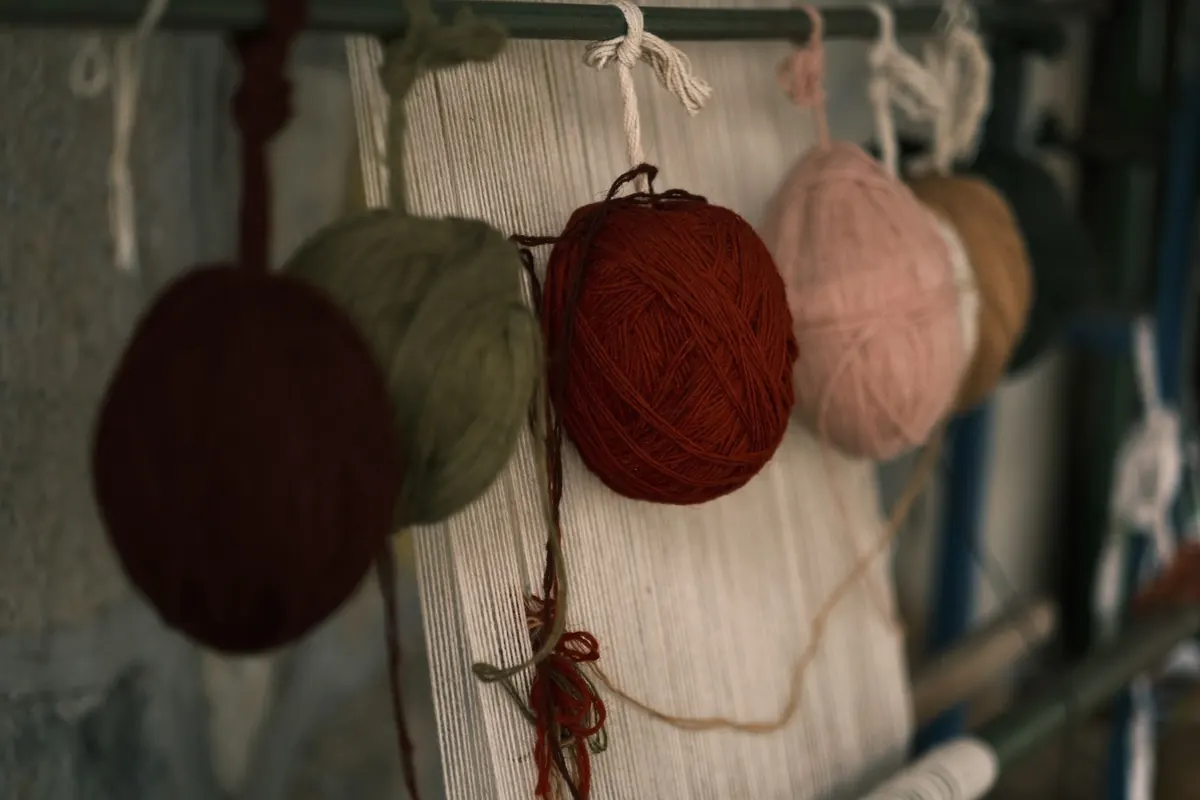
Pick up two balls of yarn from different shelves, both labelled DK, and you might assume they are interchangeable. One knits up at 20 stitches to 10cm, the other at 24, and suddenly your jumper is two sizes adrift. Yarn weight is nothing more than a thickness category — it has nothing to do with how heavy the ball feels in your bag — and it governs your needle size, your tension, your yarn quantities and, in the end, whether the thing fits.
The British system is a mix of old ply names at the fine end and names like DK, Aran and chunky at the thicker end, which is why it can feel muddled. Here is how it all fits together, and how to swap weights sensibly when the pattern calls for something you don't have.
The figures below are typical ranges for stocking stitch, not rules. Every yarn is an individual, and the ball band always has the final say.
Crochet runs on the same categories but slightly different tools. A 4-ply usually wants a 3–3.5mm hook, DK a 4mm, Aran a 5mm, chunky a 6–6.5mm. Crochet also uses more yarn than knitting for the same area, so if a pattern is written for knitting, don't assume your crochet version will come out of the same number of balls.
A ply is simply one strand twisted into the yarn, and "4-ply" has long since stopped meaning four strands. Plenty of modern 4-ply yarns are three-ply or five-ply; some are even two. Treat the name as a category, not a count, and judge by tension and metreage instead. Ply structure does matter in other ways, though: plied yarns are generally tougher and less splitty, while single-ply yarns are soft and haloed but pill faster. That difference shows up dramatically in socks, where a soft single-ply wears through at the heel in no time.
Most of what you need is printed on the wrapper. Look for the tension square first — typically given as a number of stitches and rows over 10cm in stocking stitch — then the recommended needle size that goes with it. If a yarn suggests 4mm needles but the tension is given over 20 stitches rather than 22, it's a slightly heavier DK, and knitting it on 4mm will give you a denser fabric than the pattern expects.
The second thing to check is length. Compare metres per 100g rather than the weight of the ball: a DK giving 200m per 100g is noticeably thicker than one giving 240m per 100g, and you'll need more of the thicker one to finish a garment. Grab the dye lot number too, and buy all the balls you think you need in one go. Matching a dye lot later is a lottery.
One last quirk: older patterns list imperial needle sizes. A UK 8 is 4mm, a UK 6 is 5mm, and a UK 4 is 6mm, which is worth committing to memory if you knit from vintage books.
Substitution is entirely possible, but it works on tension rather than labels. Work through these in order:
Staying within one weight of the pattern's yarn is usually safe. Substituting 4-ply for DK is a bigger leap, and it changes the fabric as well as the gauge: the stitches get smaller, the fabric gets lighter, and a garment designed to be cosy becomes thin. Shaping and stitch counts will also need reworking rather than merely resizing the needles, which is where most substitutions go wrong.
There is a happy middle ground. You can often use a heavier yarn with the pattern's suggested needle size to produce a denser, more hardwearing fabric — a chunky jumper on 5mm needles, say — as long as you're happy with the stiffer result. In crochet, going up a hook size with the same yarn is a quick way to make a blanket larger without changing the pattern at all. Just accept that the finished item may not drape like the sample photograph.
When a yarn's label is missing or unhelpful, wrap it around a ruler and count how many strands sit side by side in 2.5cm. Roughly 14–16 wraps means 4-ply, 11–12 means DK, 8–10 means Aran, and seven or fewer means chunky. It's a blunt instrument, but it will tell you which shelf you're on.
Keep a small notebook of the yarns you use and the tension you actually got from them, with the needle size that produced it. That record becomes far more useful than any chart. And when in doubt, buy a single ball, knit one honest square, and measure it. An hour spent swatching saves a jumper you'll never wear.
Photo: Sami Aksu / Pexels